early in the story
Mowgli Enters the Jungle
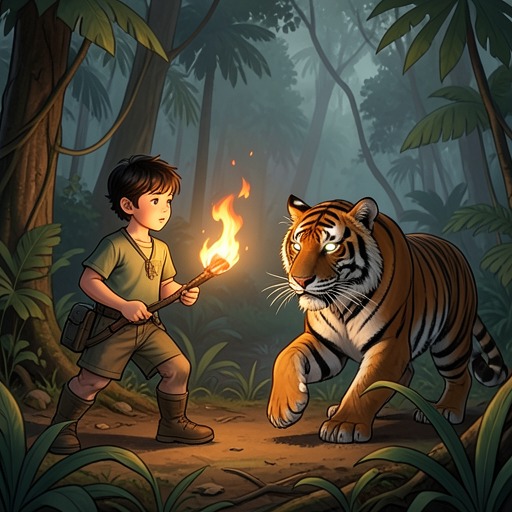
A naked human child wanders into the den of [Father Wolf](entity:character-recall-character-father-wolf-c08bf7c9956f) and [Raksha](entity:character-recall-character-raksha-3e968a55a689) after [Shere Khan](entity:character-recall-character-shere-khan-147cd7fcbfad)'s failed attack on a nearby camp. Though vulnerable, the child is fearless and quickly seeks warmth among the wolf cubs.
Shere Khan demands the child, but Raksha defies him and claims the boy as her own. She names him [Mowgli](entity:character-recall-character-mowgli-855f85993436), meaning frog, and vows that he will one day hunt the tiger who sought his life.
months later at the Full moon
The Pack Council
When the cubs are old enough, [Father Wolf](entity:character-recall-character-father-wolf-c08bf7c9956f) brings them and [Mowgli](entity:character-recall-character-mowgli-855f85993436) to [Council Rock](entity:location-recall-location-council-rock-47a835a44a48) for inspection by the [Seeonee Wolf Pack](entity:organization-recall-organization-seeonee-wolf-pac-0187f8a9ef94). [Akela](entity:character-recall-character-akela-e506ae298fa5) presides while the wolves debate whether a human child can belong among them.
[Baloo](entity:character-recall-character-baloo-8a7c84982e02) speaks for Mowgli as a pupil of the [Law of the Jungle](entity:rule-recall-rule-law-of-the-jungle-7b3f7fcb8eca), and [Bagheera](entity:character-recall-character-bagheera-b1bb665b09b0) buys his life with a freshly killed bull. The decision establishes Mowgli's formal place in the pack and binds him to both wolf custom and the protection of his two mentors.
the following ten years
Mowgli Learns the Jungle
[Mowgli](entity:character-recall-character-mowgli-855f85993436) grows up among the wolves, learning to read every sound, scent, trail, and movement of the forest. [Bagheera](entity:character-recall-character-bagheera-b1bb665b09b0) teaches him to climb and hunt, while [Baloo](entity:character-recall-character-baloo-8a7c84982e02) instructs him in the Laws that govern the many peoples of the jungle.
His unusual intelligence and human gaze make him powerful but also unsettling. He obeys the prohibition against killing cattle, honoring the bull whose death purchased his admission, while remaining unaware that the pack's young wolves increasingly resent him.
during Mowgli's childhood
The Monkey People's Temptation
[Mowgli](entity:character-recall-character-mowgli-855f85993436) is drawn to the [Bandar-log](entity:character-recall-character-bandar-log-497645f3f7fa), who flatter him, offer him food, and promise that he might become their leader. [Baloo](entity:character-recall-character-baloo-8a7c84982e02) condemns them as lawless, forgetful, imitative creatures who have no disciplined society or lasting purpose.
The encounter reveals Mowgli's vulnerability to praise and novelty. The monkeys decide that his skill at weaving branches could serve them, and they begin planning to seize him.
later that day
Mowgli's Abduction
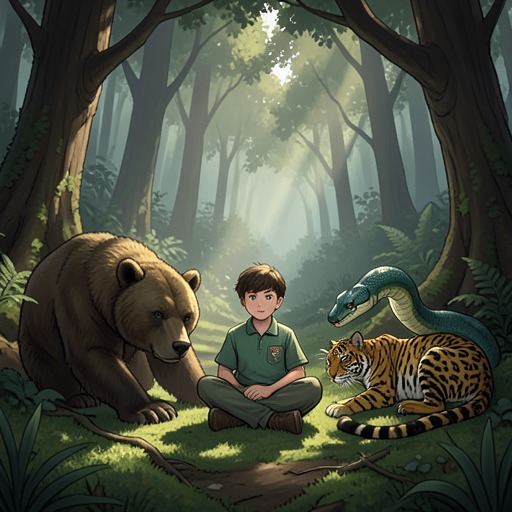
While [Mowgli](entity:character-recall-character-mowgli-855f85993436) sleeps between [Baloo](entity:character-recall-character-baloo-8a7c84982e02) and [Bagheera](entity:character-recall-character-bagheera-b1bb665b09b0), the [Bandar-log](entity:character-recall-character-bandar-log-497645f3f7fa) descend from the trees, seize him, and carry him through the treetop roads. Their speed leaves his guardians behind, but Mowgli remembers the Master Words and calls to [Rann](entity:character-recall-character-rann-f8b2d5a1f418) the [Kite](entity:creature-recall-creature-33a1ef904c68) for help.
Rann locates the captive child and reports that the monkeys have taken him beyond the river to the abandoned city known as the [Cold Lairs](entity:location-recall-location-cold-lairs-5a9b8633fa39). The message gives Baloo and Bagheera a destination and sends them in search of [Kaa](entity:character-recall-character-kaa-55259177c787).
that afternoon
The Alliance with Kaa
[Baloo](entity:character-recall-character-baloo-8a7c84982e02) and [Bagheera](entity:character-recall-character-bagheera-b1bb665b09b0) find [Kaa](entity:character-recall-character-kaa-55259177c787), an ancient and hungry rock python, and persuade him to help rescue [Mowgli](entity:character-recall-character-mowgli-855f85993436). They exploit the monkeys' fear of him and their insults toward his age and strength.
Kaa joins the pursuit, while Baloo follows as quickly as his heavy body allows. The alliance combines the bear's knowledge, the panther's speed, and the python's terrifying power.
that night
Battle at the Cold Lairs
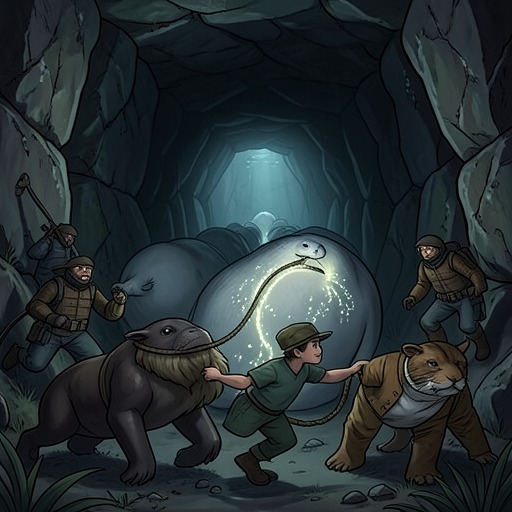
The [Bandar-log](entity:character-recall-character-bandar-log-497645f3f7fa) keep [Mowgli](entity:character-recall-character-mowgli-855f85993436) amid the ruins of their imitation city, boasting about their wisdom while failing even to provide him with food. When [Bagheera](entity:character-recall-character-bagheera-b1bb665b09b0) attacks, the monkeys overwhelm him, and Mowgli is pushed into a ruined marble summerhouse filled with cobras.
Using the Snake People's Master Word, Mowgli secures the cobras' tolerance. [Baloo](entity:character-recall-character-baloo-8a7c84982e02) reaches the terrace, but only [Kaa](entity:character-recall-character-kaa-55259177c787)'s devastating arrival breaks the monkeys' assault and forces them into terror.
immediately after the rescue
Kaa's Hunger Dance
[Kaa](entity:character-recall-character-kaa-55259177c787) smashes open the marble enclosure and frees [Mowgli](entity:character-recall-character-mowgli-855f85993436). Afterward he performs the Hunger Dance, drawing the monkeys and even the exhausted [Bagheera](entity:character-recall-character-bagheera-b1bb665b09b0) and [Baloo](entity:character-recall-character-baloo-8a7c84982e02) into a hypnotic, helpless advance.
Mowgli alone seems immune to the spectacle and pulls his friends away before they enter Kaa's jaws. The rescue succeeds, but Mowgli's disobedience brings punishment: Bagheera gives him a severe series of corrective blows, which settles the matter under jungle custom.
about ten years after Mowgli's adoption
Shere Khan's Conspiracy
As [Akela](entity:character-recall-character-akela-e506ae298fa5) grows old, [Shere Khan](entity:character-recall-character-shere-khan-147cd7fcbfad) begins courting the younger wolves with flattery and scraps. He teaches them to doubt Akela's leadership and to believe that a human child has no rightful place among the [Free People](entity:state-recall-state-free-people-d7b07603c689).
[Bagheera](entity:character-recall-character-bagheera-b1bb665b09b0) warns [Mowgli](entity:character-recall-character-mowgli-855f85993436) that Akela's next failed hunt may expose both of them to the pack's hostility. Mowgli still trusts his belonging, but the political foundation of his life has begun to collapse.
the night before the Council
Mowgli Obtains the Red Flower
[Bagheera](entity:character-recall-character-bagheera-b1bb665b09b0) tells [Mowgli](entity:character-recall-character-mowgli-855f85993436) that he must seek fire, the [Red Flower](entity:expression-recall-expression-red-flower-c45e79d9ad83) feared by every jungle creature, as protection against the coming Council. Mowgli enters the cultivated lands, takes a fire-pot from a village child, and learns to feed the coals with twigs.
The fire gives Mowgli a power that no wolf can challenge. His decision marks the point at which he begins consciously accepting the human identity that the pack has always regarded with suspicion.
the following night
Akela Misses the Kill
During a hunt, the aged [Akela](entity:character-recall-character-akela-e506ae298fa5) fails to bring down a sambhur after the younger wolves deliberately drive him toward an untried buck. The failure makes him the Dead Wolf under pack custom and opens the leadership to challenge.
The young wolves gather around [Shere Khan](entity:character-recall-character-shere-khan-147cd7fcbfad), who demands [Mowgli](entity:character-recall-character-mowgli-855f85993436)'s surrender. Akela argues that Mowgli has obeyed the Law, shared the pack's food, and been bought into it according to custom, but the pack's hunger for political advantage overwhelms its old honor.
that same Full moon night
Mowgli Defies the Council
At [Council Rock](entity:location-recall-location-council-rock-47a835a44a48), [Shere Khan](entity:character-recall-character-shere-khan-147cd7fcbfad) calls [Mowgli](entity:character-recall-character-mowgli-855f85993436) a man and demands that the wolves hand him over. [Akela](entity:character-recall-character-akela-e506ae298fa5) and [Bagheera](entity:character-recall-character-bagheera-b1bb665b09b0) defend the boy, but more than half the pack sides with the tiger and rejects its own earlier pledge.
Mowgli brings out the fire-pot and scatters the wolves with a burning branch. He declares that they are dogs rather than brothers, spares Akela from death, beats Shere Khan with the fire, and announces that he will return to humanity.
at dawn after the Council
Mowgli Leaves the Wolves
[Mowgli](entity:character-recall-character-mowgli-855f85993436) visits [Raksha](entity:character-recall-character-raksha-3e968a55a689) and [Father Wolf](entity:character-recall-character-father-wolf-c08bf7c9956f) before descending toward the villages. He weeps for the first time, discovering the human tears that accompany the loss of his wolf family.
The departure is not a clean rejection of the jungle. Mowgli promises to return with [Shere Khan](entity:character-recall-character-shere-khan-147cd7fcbfad)'s hide, while the wolf cubs promise to remain connected to him. His life henceforth will move between two societies that each claim and reject him.
shortly after leaving the jungle
Mowgli Enters the Village
[Mowgli](entity:character-recall-character-mowgli-855f85993436) reaches a human settlement and is surrounded by villagers who cannot understand his manners or his silence. The priest persuades [Messua](entity:character-recall-character-messua-9a2896b3e636) to take him into her home because he resembles the son she lost to the tiger.
Messua feeds and shelters him, while Mowgli begins learning human speech and customs. He accepts the challenge of becoming a man without forgetting that the jungle remains his first home.
the next three months
Mowgli Learns Human Customs
[Mowgli](entity:character-recall-character-mowgli-855f85993436) learns clothing, money, plowing, village speech, and the social habits of humans. He is bewildered by caste distinctions and amused by the villagers' false stories about the jungle, especially [Buldeo](entity:character-recall-character-buldeo-7080b7d107a7)'s claim that [Shere Khan](entity:character-recall-character-shere-khan-147cd7fcbfad) is possessed by a moneylender's ghost.
The village treats Mowgli as both a curiosity and a possible threat. His appointment as a buffalo herder places him in the open country, where he can maintain contact with the wolves and watch for Shere Khan's return.
the following days
Mowgli Herds the Buffaloes
[Mowgli](entity:character-recall-character-mowgli-855f85993436) takes charge of the village buffalo herd, quickly imposing his will on animals that the human children fear. [Gray Brother](entity:character-recall-character-gray-brother-19f80e4c8129) meets him near the grazing grounds and reports that [Shere Khan](entity:character-recall-character-shere-khan-147cd7fcbfad) has returned and is waiting for an opportunity to kill him.
Mowgli arranges a signal system with Gray Brother and plans to use the buffaloes rather than confront the tiger directly. The open plain becomes the stage on which human resources and jungle knowledge are combined.
after Shere Khan's return
Akela Returns
When [Gray Brother](entity:character-recall-character-gray-brother-19f80e4c8129) reports that [Shere Khan](entity:character-recall-character-shere-khan-147cd7fcbfad) is hiding in the Waingunga ravine, [Akela](entity:character-recall-character-akela-e506ae298fa5) arrives to help. [Mowgli](entity:character-recall-character-mowgli-855f85993436) asks the two wolves to divide the herd into cows with calves and bulls, preparing a coordinated drive.
Akela's return restores the old bond between Mowgli and the wolf who once led the pack. Together they turn the buffalo herd into a weapon capable of trapping the fed and sluggish tiger.
the next afternoon
Shere Khan Is Trapped
[Mowgli](entity:character-recall-character-mowgli-855f85993436) drives the bulls around the ravine while [Gray Brother](entity:character-recall-character-gray-brother-19f80e4c8129) guides the cows toward its lower end. He then summons [Shere Khan](entity:character-recall-character-shere-khan-147cd7fcbfad) and sends the bull herd charging down the steep passage.
Shere Khan, heavy with a recent meal and unable to climb the ravine walls, is caught between the two herds. The plan turns the tiger's physical weakness and habitual greed into the means of his destruction.
that afternoon
Mowgli Kills Shere Khan
The buffaloes trample [Shere Khan](entity:character-recall-character-shere-khan-147cd7fcbfad) to death in the ravine. [Mowgli](entity:character-recall-character-mowgli-855f85993436) finds the tiger's body and begins removing its hide, fulfilling the promise made at [Council Rock](entity:location-recall-location-council-rock-47a835a44a48).
When [Buldeo](entity:character-recall-character-buldeo-7080b7d107a7) arrives to claim the reward, Mowgli refuses to surrender the skin and has [Akela](entity:character-recall-character-akela-e506ae298fa5) restrain him. The killing ends Shere Khan's immediate threat, but it also reveals Mowgli's power to the villagers and makes his place among humans even more precarious.
that evening
The Village Rejects Mowgli
[Mowgli](entity:character-recall-character-mowgli-855f85993436) returns with the herd and [Shere Khan](entity:character-recall-character-shere-khan-147cd7fcbfad)'s skin, expecting recognition, but the villagers accuse him of sorcery and call him a wolf's child. Stones are thrown, [Buldeo](entity:character-recall-character-buldeo-7080b7d107a7) fires the [Tower musket](entity:object-recall-object-tower-musket-c092242b034f), and [Messua](entity:character-recall-character-messua-9a2896b3e636) warns Mowgli that the crowd may kill them both.
Mowgli sends the buffaloes through the gate, spares the village for Messua's sake, and walks away with [Akela](entity:character-recall-character-akela-e506ae298fa5). Human society has now cast him out just as the wolf pack did, confirming that his destiny lies between worlds rather than securely within either.
that night
The Tiger Skin Returns
[Mowgli](entity:character-recall-character-mowgli-855f85993436) carries [Shere Khan](entity:character-recall-character-shere-khan-147cd7fcbfad)'s hide to [Council Rock](entity:location-recall-location-council-rock-47a835a44a48) and lays it over the seat where [Akela](entity:character-recall-character-akela-e506ae298fa5) once presided. Akela calls the ancient summons, and the battered remnants of the [Seeonee Wolf Pack](entity:organization-recall-organization-seeonee-wolf-pac-0187f8a9ef94) gather to witness that Mowgli has kept his word.
Some wolves ask Akela and Mowgli to lead them again, but [Bagheera](entity:character-recall-character-bagheera-b1bb665b09b0) warns that their old lawlessness may return when they are fed. Mowgli rejects restoration of the pack and chooses solitary hunting with the four wolf brothers.
Spring at Novastoshnah
Kotick Is Born White
At the seal nursery of [Novastoshnah](entity:location-recall-location-novastoshnah-4ba99b72904c) on [Saint Paul Island](entity:location-recall-location-saint-paul-island-19bdf6dd166e), [Sea Catch](entity:character-recall-character-sea-catch-1bfb27c12f7a) fights for a breeding place and reunites with [Matkah](entity:character-recall-character-matkah-5bf57a84524b). Their newborn son [Kotick](entity:character-recall-character-kotick-a3a1907e3f85) has unusually pale fur, and Matkah predicts that he will grow into a white seal.
The white coat distinguishes Kotick from the millions of ordinary seals and foreshadows his exceptional role. His early life begins amid crowded nurseries, violent territorial contests, and a dangerous dependence on the sea.
the following Summer
Kotick Learns the Sea
[Matkah](entity:character-recall-character-matkah-5bf57a84524b) teaches [Kotick](entity:character-recall-character-kotick-a3a1907e3f85) to swim, read the feel of the water, avoid Killer whales, and hunt fish across the Pacific. He spends months mastering deep-sea travel and becomes far more capable than the young seals who remain near the beach.
The ocean gives Kotick knowledge, independence, and a wider view of the seals' world. This education later enables him to search for a refuge when the established rookeries prove unsafe.
the next Summer
Kotick Sees the Slaughter
Returning to the seal beaches, [Kotick](entity:character-recall-character-kotick-a3a1907e3f85) follows a drove of young seals inland and witnesses hunters club them, strip off their skins, and pile the carcasses. The sight horrifies him, while the other seals dismiss it as an ordinary part of beach life.
His white coat makes him conspicuous, but his true difference is moral: he refuses to accept inherited suffering as inevitable. He decides to search for an island where men cannot reach the seals.
the following Autumn through five seasons
The Search for Refuge
[Kotick](entity:character-recall-character-kotick-a3a1907e3f85) consults [Sea Vitch](entity:character-recall-character-sea-vitch-f3cdab3ca841) and is told to seek [Sea Cow](entity:character-recall-character-sea-cow-a3e1388b2ccc), then travels widely through the Pacific in search of an unoccupied, secure rookery. He explores islands from the northern seas to the southern oceans, repeatedly finding traces of seals already destroyed by humans.
An old survivor of [Masafuera](entity:location-recall-location-masafuera-ea8bbba6413c) tells him of a prophecy that a white seal will lead the seal people to safety. The story renews Kotick's resolve after years of mockery and failure.
the fifth year of his search
Kotick Finds Sea Cow
Near Copper Island, [Kotick](entity:character-recall-character-kotick-a3a1907e3f85) encounters a herd of immense, speechless sea cows and realizes that they are the [Sea Cow](entity:character-recall-character-sea-cow-a3e1388b2ccc) described by [Sea Vitch](entity:character-recall-character-sea-vitch-f3cdab3ca841). He follows them northward despite their slow pace and their strange, gestural councils.
The sea cows lead him through a submerged passage beneath coastal cliffs. Beyond it lies a chain of sheltered beaches with excellent fishing, deep water, natural defenses, and no signs that humans have ever reached them.
after the discovery
The Safe Rookery Revealed
[Kotick](entity:character-recall-character-kotick-a3a1907e3f85) thoroughly explores the hidden beaches and confirms that they are ideal for seal nurseries. The offshore shoals would wreck ships, the cliffs are inaccessible, and the tunnel provides a concealed route from the open sea.
He returns to [Novastoshnah](entity:location-recall-location-novastoshnah-4ba99b72904c) convinced that he has found a permanent refuge. His discovery transforms the problem from one of endurance into one of collective migration.
the next Summer
Kotick Challenges the Seals
The seals laugh at [Kotick](entity:character-recall-character-kotick-a3a1907e3f85)'s account and refuse to leave the nurseries they have fought to possess. A young seal mocks him for avoiding the traditional fights, so Kotick challenges him and promises that the defeated side will follow the victor.
Kotick's frustration becomes a public test of leadership. To persuade the seal people, he must demonstrate not merely that the new rookery exists, but that he possesses the authority to lead them there.
that night
Kotick Wins the Beach Fight
[Kotick](entity:character-recall-character-kotick-a3a1907e3f85) charges through the nurseries and defeats one mature sea catch after another. His years of uninterrupted swimming have left him in superb condition, while the established fighters are weakened by seasonal fasting and repeated territorial combat.
[Sea Catch](entity:character-recall-character-sea-catch-1bfb27c12f7a) joins his son's assault, and together they defeat the seals who resist. The victory forces the beach population to recognize Kotick's strength and opens the way for a mass migration.
one week later
The Seals Migrate
[Kotick](entity:character-recall-character-kotick-a3a1907e3f85) leads nearly ten thousand seals through the [Sea Cow's tunnel](entity:object-recall-object-sea-cow-s-tunnel-5771e8d55974) to the protected beaches. Those who remain at [Novastoshnah](entity:location-recall-location-novastoshnah-4ba99b72904c) call the migrants foolish, but the new colony thrives where no human hunters can reach it.
Over succeeding years, more seals leave Novastoshnah, [Lukannon Beach](entity:location-recall-location-lukannon-beach-ba95ced823f2), and other nurseries to join Kotick. His leadership changes the geography and future prospects of the seal people.
early in the story
Rikki-Tikki Is Rescued
A summer flood washes the young mongoose [Rikki-tikki-tavi](entity:character-recall-character-rikki-tikki-tavi-6fb067d816e8) from his burrow and leaves him helpless on a garden path. [Teddy](entity:character-recall-character-teddy-5cce5c5cdfa6)'s family rescues him, warms him, and gives him food in their bungalow.
Rikki's instinctive curiosity makes him quickly adopt the household as his own territory. His arrival establishes the domestic garden as a small ecosystem whose safety depends on his eventual confrontation with the cobras.
the following morning
Rikki-Tikki Kills Karait
In the garden, Rikki encounters [Karait](entity:character-recall-character-karait-a522cd2249ce), a tiny dusty snake poised near [Teddy](entity:character-recall-character-teddy-5cce5c5cdfa6). Though Karait is exceptionally dangerous because of his speed and inconspicuous size, Rikki leaps onto his back and bites him near the head.
The victory saves Teddy and gives the family confidence in their new guardian. It also confirms that Rikki's role is not passive companionship but active defense against the reptiles threatening the bungalow.
that night
Nag and Nagaina Conspire
[Chuchundra](entity:character-recall-character-chuchundra-bf9a7d3cae3d) alerts Rikki to a snake moving through the bathroom sluice. Rikki overhears [Nag and Nagaina](entity:relation-recall-relation-nag-and-nagaina-7106f0e261fb) planning to kill the human family so that the garden will again belong entirely to them, especially once their eggs hatch.
The conversation reveals that the cobras' conflict with Rikki is strategic rather than accidental. Their brood and territorial ambitions make the bungalow a battlefield whose stakes include the lives of every human inhabitant.
before dawn the next morning
Rikki Kills Nag
[Nag](entity:character-recall-character-nag-398c419cae37) coils beside the bath water, intending to strike [Teddy](entity:character-recall-character-teddy-5cce5c5cdfa6)'s father when he enters. Rikki attacks the cobra's head and clings to it through the violent thrashing, holding on until the father wakes and shoots Nag with a shotgun.
Rikki's bite makes the killing possible, while the man's weapon finishes the larger snake. [Nagaina](entity:character-recall-character-nagaina-ba0957cc1e95) is left widowed, enraged, and still in possession of the eggs that can renew the threat.
later that morning
Nagaina's Eggs Destroyed
[Darzee](entity:character-recall-character-darzee-8b31114ecda9)'s wife distracts [Nagaina](entity:character-recall-character-nagaina-ba0957cc1e95) by pretending to have a broken wing, allowing Rikki to reach the melon bed. He finds twenty-five eggs and crushes the young cobras inside most of them.
The destruction of the brood turns the conflict into a final contest between the two adult enemies. Rikki saves the garden from a future generation of snakes, but one egg remains in Nagaina's possession.
immediately afterward
Nagaina Threatens Teddy
[Nagaina](entity:character-recall-character-nagaina-ba0957cc1e95) coils beside [Teddy](entity:character-recall-character-teddy-5cce5c5cdfa6) during breakfast and holds the family motionless while she threatens to strike. Rikki arrives carrying the last egg and taunts her with the destruction of the rest of the brood.
Nagaina turns from the humans toward the egg, giving Teddy's father the moment needed to pull the boy out of reach. Rikki's deception saves the family and forces Nagaina into a desperate flight.
that same morning
Rikki Kills Nagaina
[Nagaina](entity:character-recall-character-nagaina-ba0957cc1e95) snatches the egg and races toward her burrow, with Rikki pursuing her through the garden. [Darzee](entity:character-recall-character-darzee-8b31114ecda9)'s wife delays the cobra just long enough for Rikki to seize her tail as she disappears underground.
Rikki follows into the dangerous tunnel and holds on despite the darkness and the risk of a counterstrike. He eventually emerges alone, covered in dirt, declaring that the widow will never return.
later that afternoon
The Garden Is Secured
After sleeping off the battle, Rikki returns to the bungalow as the Coppersmith announces the deaths of [Nag and Nagaina](entity:relation-recall-relation-nag-and-nagaina-7106f0e261fb) throughout the garden. [Teddy](entity:character-recall-character-teddy-5cce5c5cdfa6)'s family welcomes him as the protector who saved all their lives.
Rikki remains vigilant rather than becoming vain, continuing to patrol the garden so that no cobra can establish itself there again. His victory restores peace to the human household and closes the tale of the garden war.
years before the central elephant story
Kala Nag's Service
[Kala Nag](entity:character-recall-character-kala-nag-9b84cf148be7), the great black elephant, serves the [Government of India](entity:organization-recall-organization-government-of-in-c5c47abb0327) through wars, transport, timber work, and elephant-catching campaigns. His long service has made him experienced, disciplined, and famous among the mahouts.
[Big Toomai](entity:character-recall-character-big-toomai-2daeb3dff037) drives him, while [Little Toomai](entity:character-recall-character-little-toomai-00efae361a99) grows up beneath his shadow and learns to handle him. The boy's intimacy with Kala Nag gives him unusual confidence and makes the elephant a bridge between human discipline and the hidden life of wild elephants.
the end of the catching season
The Keddah Elephant Drive
During a dangerous [Keddah](entity:location-recall-location-keddah-10484c557ee6) drive, [Little Toomai](entity:character-recall-character-little-toomai-00efae361a99) assists the elephant catchers and throws a rope to help secure a young calf. [Kala Nag](entity:character-recall-character-kala-nag-9b84cf148be7) lifts him from danger, but [Big Toomai](entity:character-recall-character-big-toomai-2daeb3dff037) scolds him for entering work meant for trained hunters.
[Petersen Sahib](entity:character-recall-character-petersen-sahib-edca74c3f16c) notices the boy's courage and gives him money, yet jokingly says he may enter all Keddahs only after he has seen the elephants dance. The impossible challenge plants a powerful desire in Little Toomai.
the following days
The March to Camp
The captured elephants and their drivers leave the hills for a receiving camp. An Assamese driver warns that the wild elephants know the season's drives are ending and will dance that night, but [Big Toomai](entity:character-recall-character-big-toomai-2daeb3dff037) dismisses the claim as superstition.
[Little Toomai](entity:character-recall-character-little-toomai-00efae361a99) listens closely and becomes increasingly alert to the elephants' restlessness. The camp's human confidence contrasts with the animals' silent awareness of a larger nocturnal movement.
that night
Kala Nag Leaves Camp
While the camp sleeps, [Kala Nag](entity:character-recall-character-kala-nag-9b84cf148be7) hears the call of a wild elephant and slips his restraints. [Little Toomai](entity:character-recall-character-little-toomai-00efae361a99) follows him, pleading to be taken along, and Kala Nag lifts him onto his neck before entering the forest.
The journey separates the boy from human supervision and places him inside the elephants' own world. His trust in Kala Nag becomes the means by which he reaches a place no ordinary observer could find.
before dawn that night
The Elephants' Dance
[Kala Nag](entity:character-recall-character-kala-nag-9b84cf148be7) reaches a hidden clearing in the [Garo Hills](entity:location-recall-location-garo-hills-16a2728948d3) where wild elephants gather in enormous numbers. They stand together, communicate through low sounds, and stamp the earth in a synchronized rhythm that shakes the ground for hours.
[Little Toomai](entity:character-recall-character-little-toomai-00efae361a99) watches from Kala Nag's neck, terrified but transfixed. By morning the elephants have trampled the surrounding growth into a broad dance floor, proving that the mysterious tradition is a real and organized act of the elephant people.
the following morning
Little Toomai Returns
[Kala Nag](entity:character-recall-character-kala-nag-9b84cf148be7) returns to [Petersen Sahib](entity:character-recall-character-petersen-sahib-edca74c3f16c)'s camp exhausted, carrying [Little Toomai](entity:character-recall-character-little-toomai-00efae361a99), whose face and clothing show that he has spent the night in the forest. The boy collapses after announcing that he has seen the elephants dance.
Petersen Sahib and [Machua Appa](entity:character-recall-character-machua-appa-87d9323f4c6c) follow the tracks and verify that the clearing was newly stamped out by dozens of elephants. The discovery confirms Little Toomai's account and establishes that he has witnessed what no human hunter had previously seen.
that evening
Toomai of the Elephants
The elephant catchers celebrate [Little Toomai](entity:character-recall-character-little-toomai-00efae361a99) and mark his forehead with blood as a sign that he belongs to the forest. [Machua Appa](entity:character-recall-character-machua-appa-87d9323f4c6c) lifts him before the assembled camp and formally gives him the honored name Toomai of the [Elephants](entity:creature-recall-creature-f514a776cd46).
The elephants themselves salute by raising their trunks, recognizing the boy who has entered their hidden world. The naming transforms a reckless child into an initiated future tracker and heir to a tradition larger than human command.
later in the book
The Rawal Pindi Review
At [Rawal Pindi](entity:location-recall-location-rawal-pindi-75c2d33be0ab), rain-soaked troops, animals, guns, and transport converge for a grand review before the Viceroy and the Amir of Afghanistan. The camp animals reveal their different fears and forms of courage during a night of confusion, while each understands that its duty is defined by the commands it receives.
The following day the cavalry, artillery, elephants, bullocks, and screw-gun mules move in coordinated formation before the dignitaries. The spectacle demonstrates how an immense military system converts many distinct creatures and peoples into one disciplined machine.
at the close of the review
The Chain of Command
An Afghan chief asks how the review was accomplished, and a native officer explains the descending chain of obedience from the Viceroy through generals, officers, drivers, and finally the animals. Each creature serves according to its assigned function.
The explanation contrasts organized collective discipline with the Afghan chief's admission that his people obey only their own wills. The book ends by turning the animal voices into a final image of service, hierarchy, endurance, and the varied courage required by duty.